Bora Bora Honeymoon Costs: 5 Ways to Save $10,000+
"Paradise is expensive, but a masterpiece of a honeymoon doesn't require a king's ransom if you know how to navigate the currents."
Planning a honeymoon to Bora Bora often feels like trying to calculate the depth of the lagoon—you know there is a vastness to the costs, but the exact bottom is hard to find.
For many couples, the sheer scale of the numbers can be overwhelming, turning a dream of turquoise waters into a source of financial anxiety.
* Total costs fluctuate wildly based on your choice of overwater bungalow versus garden villa. * Strategic timing and flight routing are your two greatest levers for saving thousands. * Optimizing the balance between luxury accommodations and activity spending is the key to a successful budget. * This guide provides a realistic breakdown and five specific ways to shave significant amounts off your total bill.

What is the True Total Cost of a honeymoon in Bora Bora?
I remember sitting in a small cafe in Papeete in late 2025, looking at a printed itinerary, and realizing that the flight alone was nearly as much as a week of luxury lodging. According to World Bank data, French Polynesia recorded international tourist arrivals of 89,400 in 2020.
The sheer scale of travel to French Polynesia means that your baseline budget starts much higher than almost any other tropical destination.
The base cost of a Bora Bora honeymoon is determined by three primary pillars: your accommodation tier, your flight logistics, and your activity baseline.
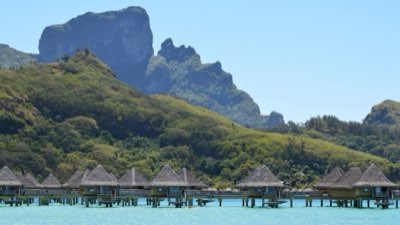
In the luxury sector, an overwater bungalow can range anywhere from $800 to over $3,000 per night, depending on whether you are in a standard lagoon villa or a premium suite with a direct view of Mount Otemanu.
Flight logistics represent a massive portion of the upfront cost. Most travelers flying from the United States must navigate a long-haul journey to Tahiti (PPT) followed by a domestic transfer via Air Tahiti to Bora Bora (BOB).
These inter-island flights and boat transfers are non-negotiable costs that can add thousands to a couple's total.
Activity costs are the variable "hidden" expenses. A private lagoon tour with snorkeling, shark feeding, and a boat captain can easily cost $500 to $1,000 per couple. When you add high-end dining—where a single dinner for two can reach $400—the daily spend can escalate quickly.
To help you visualize, here is a sample budget framework for a 7-day honeymoon:
| Budget Tier | Description | Estimated Total (USD) |
|---|---|---|
| Mid-Range Luxury | Garden/Beach Villas, mix of tours and local dining | $7,000 – $10,000 |
| High-End Luxury | Overwater Bungalows, private tours, fine dining | $12,000 – $20,000 |
| Ultra-Luxury | Premium Suites, private charters, all-inclusive premium | $25,000+ |
Understanding these tiers is the first step in deciding where you want to push your spending and where you can pull back. But how do you actually keep that number from spiraling out of control?
5 Proven Strategies to Achieve Your $10,000 Savings Goal
Walking through the lobby of a high-end resort in July 2026, you realize that the "luxury" isn't just in the thread count of the sheets, but in the seamlessness of the experience.
However, you don't need to spend $10,000 extra to feel that seamlessness; you just need to be smarter about how you book.
Strategy 1: Timing is Everything (Shoulder vs. Peak Season) The most effective way to save is to avoid the peak travel months. In French Polynesia, the dry season typically offers the best weather, but prices skyrocket during Christmas, New Year, and mid-summer.
By choosing the "shoulder season"—the months just before or after the peak—you can find significant discounts on room rates while still enjoying beautiful weather. Just be aware that during the transition to the wet season, humidity can rise, sometimes reaching 100% at night.
Strategy 2: Flight Path Optimization Don't just book the first flight you see. The route from the U.S. to Tahiti often involves multiple stops. Sometimes, flying into a different hub or choosing a specific airline alliance can save a couple $2,000 or more.
Additionally, look for flights that offer better connections to minimize the time spent in transit, as long layovers can sometimes lead to extra accommodation costs that eat into your savings.
Strategy 3: Choosing the Right Base (Resort Selection) You do not have to stay in an overwater bungalow every single night to experience the magic of Bora Bora.
A common strategy to save thousands is to split your stay: spend three nights in a high-end garden or beach villa and three nights in a premium overwater bungalow. This gives you the "bucket list" experience without the permanent premium price tag.
Strategy 4: All-Inclusive vs. A La Carte Dining Many luxury resorts in Bora Bora offer meal plans. Do the math before you arrive. If you plan on spending your days exploring the island and eating at local spots, an all-inclusive package might be a waste of money.
However, if you intend to spend most of your time on the resort grounds, a meal plan can prevent "sticker shock" when the bill arrives at the end of your stay.
Strategy 5: Activity Bundling vs. Drop-in Fees Avoid the temptation to book every single excursion as a last-minute, individual service. Resort-organized tours often carry a significant markup.
Instead, look for bundled packages that include multiple activities (like a lagoon tour combined with a sunset cruise) or pre-book through reputable local operators in Bora Bora town to secure better rates than the "walk-up" prices at the resort desk.
It sounds simple, but executing these moves requires a bit of coordination. The real challenge begins when you actually land on the island.
Why does the geography of the lagoon matter so much?
The island of Bora Bora is a masterpiece of natural geography, a volcanic heart surrounded by a protective ring of coral. The main island is relatively small, measuring only about 8 km (5 mi) from north to south, but its presence is monumental due to the towering peaks of the extinct volcano.
This geography creates a unique lagoon structure. The central volcanic island is surrounded by a lagoon, which is itself separated from the open sea by a wide reef. This creates the calm, turquoise waters that make the island so famous.
The lagoon acts as a natural sanctuary, providing the perfect environment for the marine life that travelers come to see.
Culturally, the islands are steeped in Polynesian tradition. The significance of the Tiare flower and the history of traditional tattooing are woven into the fabric of life here.
When you visit, you aren't just visiting a beach; you are stepping into a delicate ecosystem where the land and sea are deeply interconnected.
Because the environment is so sensitive, travelers should practice responsible tourism. The health of the coral reefs is vital to the lagoon's beauty. When engaging in snorkeling or diving, always follow local guidelines to protect the reef, as these ecosystems are both beautiful and fragile.
But how do you actually navigate the logistics of getting from the airport to your villa without losing your mind?
How do you manage the travel logistics without the stress?
The journey to paradise is often the most taxing part of the trip. A typical itinerary involves an international flight to Tahiti, followed by a domestic hop to Bora Bora. This transition usually involves a mix of planes and boats.
Upon arriving at the Bora Bora airport, you will typically be met by a resort shuttle. Most high-end resorts are located on private motus (islets) and require a boat transfer to reach your room.
This transfer is usually included in your stay, but it is a vital piece of the logistics chain to keep in mind when planning your arrival time.
Before you leave, prepare for the environment. The humidity can be high, so packing lightweight, breathable clothing is essential.
Also, remember that while you will want to explore the water, you should bring your own high-quality reef-safe sunscreen to protect both your skin and the delicate coral reefs.
To keep your trip running smoothly, follow this essential arrival checklist:
- Verify Transfer Details: Confirm with your resort exactly which boat or shuttle is meeting you at the Bora Bora airport (BOB) to avoid waiting in the heat.
- Check Luggage Weight: Ensure your bags meet the strict weight limits for Air Tahiti domestic flights, as these are much smaller than international planes.
- Coordinate Check-in: If your flight arrives in the morning but check-in is at 3:00 PM, ask the resort if you can drop bags and access the lagoon immediately.
- 4.tPrepare Local Currency: Have enough French Pacific Francs (XPF) on hand for small tips or local snacks before you head to the remote motus.
- Hydration Check: Drink plenty of water during the transition from the plane to the boat to combat the sudden tropical heat.
Getting through the logistics is just the beginning. Once you are settled, you need to know how to make the most of your time.
Comments 0